
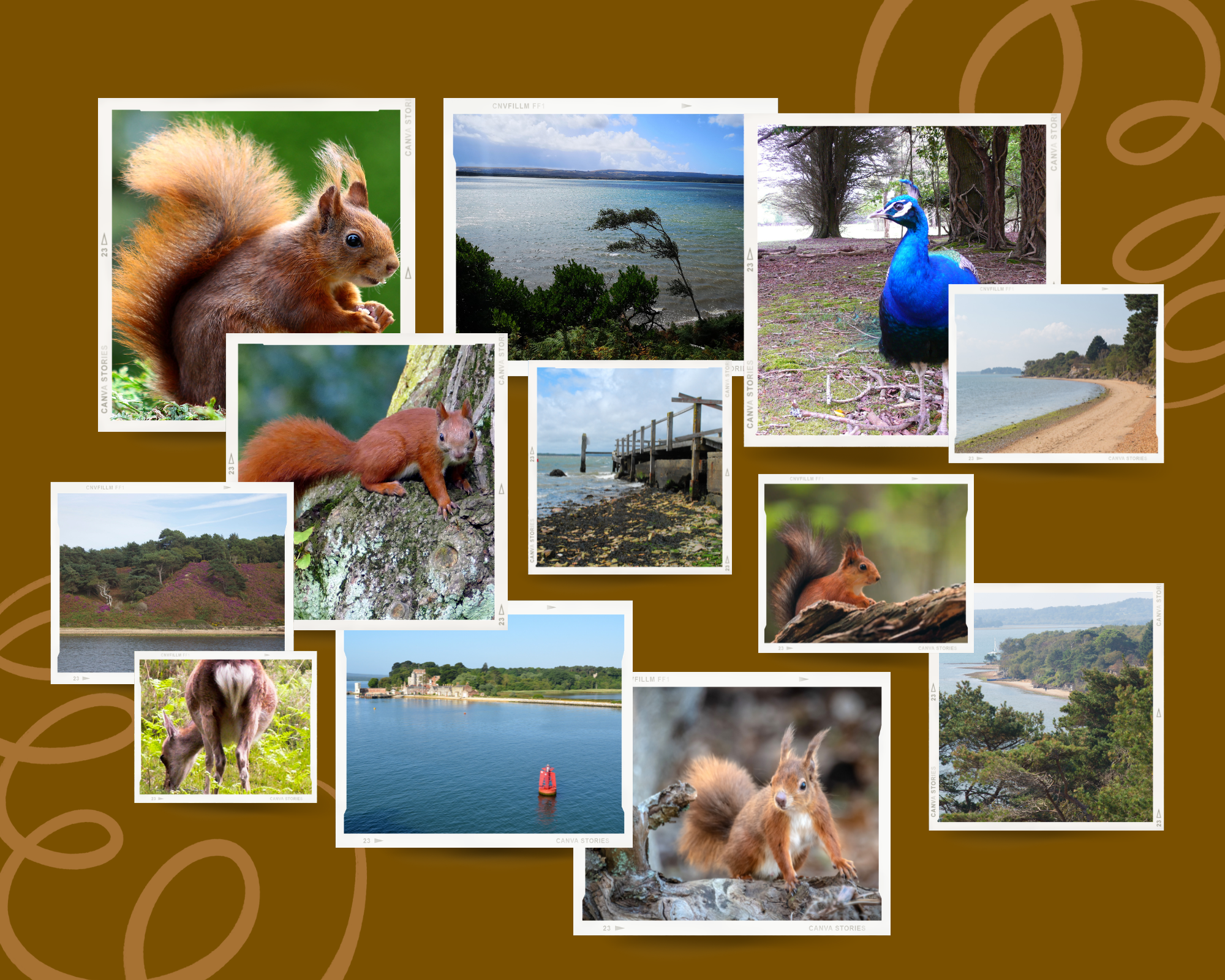
If you want to see what a red squirrel paradise looks like when nobody interferes, you don’t need to leave the country, just hop over to Poole Harbour and look at Brownsea Island.
Alongside the Isle of Wight, Brownsea is one of the last strongholds for red squirrels in southern England, and its story is a strange one. In the 1850s an entrepreneur called Colonel Waugh tried to build a pottery empire there on clay that turned out to be useless, and bankrupted himself so badly he fled to Spain. A few decades later a wealthy stockbroker used the castle for shooting parties and to house his antique instrument collection. Neither of these chaps did the squirrels any favours.
The real turning point came in 1927, when the island was bought by a widow named Mary Bonham-Christie. She shut down what remained of the island’s industry and, from the very start, made her priorities clear: before she’d even finished the purchase, she discovered a tenant kept a caged bird and was furious about it, declaring she’d allow no animals to be caged or killed on her land. For the next 34 years she simply refused to let the modern world interfere, no shooting, no felling, no managing. She earned the nickname “the Demon of Brownsea” for keeping people out, but what she was really doing, decades before anyone called it “rewilding,” was giving the woodland the space to just get on with being woodland.
Giving the woodland the space to just get on with being woodland is exactly the bit worth borrowing for your own garden.
Why isolation isn’t the whole story
It’s tempting to think Brownsea’s squirrels are safe purely because it’s an island, and honestly, that is most of it, water is still the best fence ever invented, and it’s exactly what’s protected our reds here on the Isle of Wight too. The Solent has done for us what Poole Harbour did for Brownsea: kept grey squirrels from ever getting a foothold.
But isolation on its own isn’t enough. Even after the National Trust and Dorset Wildlife Trust took over management of Brownsea in the 1960s, they had to spend decades hand-clearing rampant rhododendron that had spread across the island during Mrs Bonham-Christie’s watch. It’s a beautiful shrub, but it chokes out the native trees and shrubs that actually feed squirrels such as hazel, oak, sweet chestnut. Removing it, tree by tree, by hand, was what finally let the food supply properly recover.
In other words: a safe haven with nothing to eat isn’t much of a haven. Brownsea’s squirrels needed both the water around them and the right trees within it.
What this means for your garden
You don’t have a moat, but you can still do the second half of Brownsea’s story which is quite simply, giving squirrels a garden actually worth visiting:
- Plant for food, not just for cover. Hazel, oak, sweet chestnut, and wild cherry are the trees Brownsea’s own habitat work prioritised, and they’re just as valuable in an Isle of Wight garden.
- Be wary of rhododendron and other dense ornamental thickets. They are lovely to look at, but if they dominate a border they can crowd out the more useful planting nearby, in much as the rhododendron did across the entirety of Brownsea Island.
- Give things room to be a little wild. Mrs Bonham-Christie’s approach wasn’t tidy, and that was rather the point; deadwood, leaf litter, and untrimmed corners all support the food chain squirrels rely on, not just the squirrels themselves.
Our own advantage here on the Island is that we’re starting from a much better place than Brownsea ever did. There are no grey squirrel colonies here at all, so this isn’t about competing with them for space. It’s simply about making sure that every garden adds a little more to what’s already a rare and precious population, the same way one very determined woman, quite by accident, ended up doing for an island in Dorset.
Below is a brief list of low effort / high impact things that you can plant and do in your garden to attract and support red squirrels:
Plant
- Hazel: nuts are a red squirrel favourite, and it’s a fast, easy-to-grow native shrub
- A few native oak or sweet chestnut saplings: slower to mature, but hugely valuable long-term shelter and food sources if you have the space
- Wild cherry: food plus decent cover, and it’s attractive in its own right
Do
- Leave some deadwood or a log pile: supports the insects and fungi that feed into the wider food chain, and gives squirrels places to forage and shelter
- Skip the tidy-up on leaf litter and undergrowth: an untrimmed corner does more for wildlife than a manicured one
- Put up a squirrel feeder: fill with nuts or seed, positioned away from ground-level predators and pets
- Avoid dense rhododendron or other thick ornamental thickets dominating a border, they crowd out the useful planting nearby
If you do not have access to a garden then you can always support the red squirrels of The Isle of Wight by adopting a squirrel:
https://iowredsquirreltrust.co.uk/product-category/symbolic-red-squirrel-adoption
or
Treating yourself to on of our calendars:
https://iowredsquirreltrust.co.uk/product/2027-isle-of-wight-red-squirrel-trust-calendar